 Do you want to go to
Statkraft United States?
Do you want to go to
Statkraft United States?
In an energy-shocked world, is the energy transition more essential than ever? Three panel take-aways
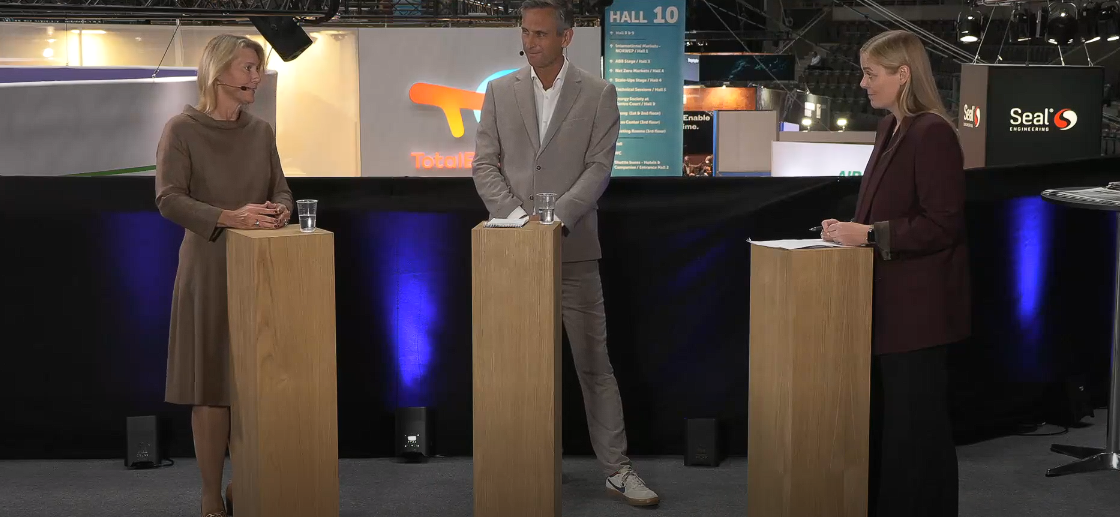
Hosted at one of Scandinavia’s’s largest energy conferences, Statkraft’s EVP for Europe and Ember’s co-founder dived into details and data of the energy transition, assessing issues such as cost, competitiveness, climate and more. Here are three take-aways from their discussion.
Data first: what do the numbers show?
In a six-year period, households, governments and economies have been stung by not one, but two generational energy shocks. For Co-founder of Ember, Dave Jones, the EU’s decision post-Russian invasion of Ukraine to double down on their electrification strategy has paid dividends.
During three years of the Russia-Ukraine war, he points out, the EU has imported over two trillion dollars of imported fuels. The response? In 2025, wind and solar generated more energy than fossil fuel generation across the EU. This summer, a quarter of electricity across EU will be from solar. By 2040, the EU’s Electrification Action Plan seeks to half oil demand by half and reduce gas demand by two thirds.
And what of the developers: is the investment there to match that ambition? Statkraft’s EVP for Europe, Barbara Flesche, points to Statkraft’s portfolio of 16 GW across Europe spanning wind, solar, batteries and grid stabilisation. And that’s just for now; Flesche also references the company’s current investment of 1.4 billion Euros at work across 16 projects as proof of an energy transition not just on track, but in a hurry.
Addition or transition: which is it?
With their discussion taking place in the midst of a fossil-fuel-dominated event, the panelists are naturally challenged on the continued ubiquity of legacy fuels in even the most well-funded energy systems.
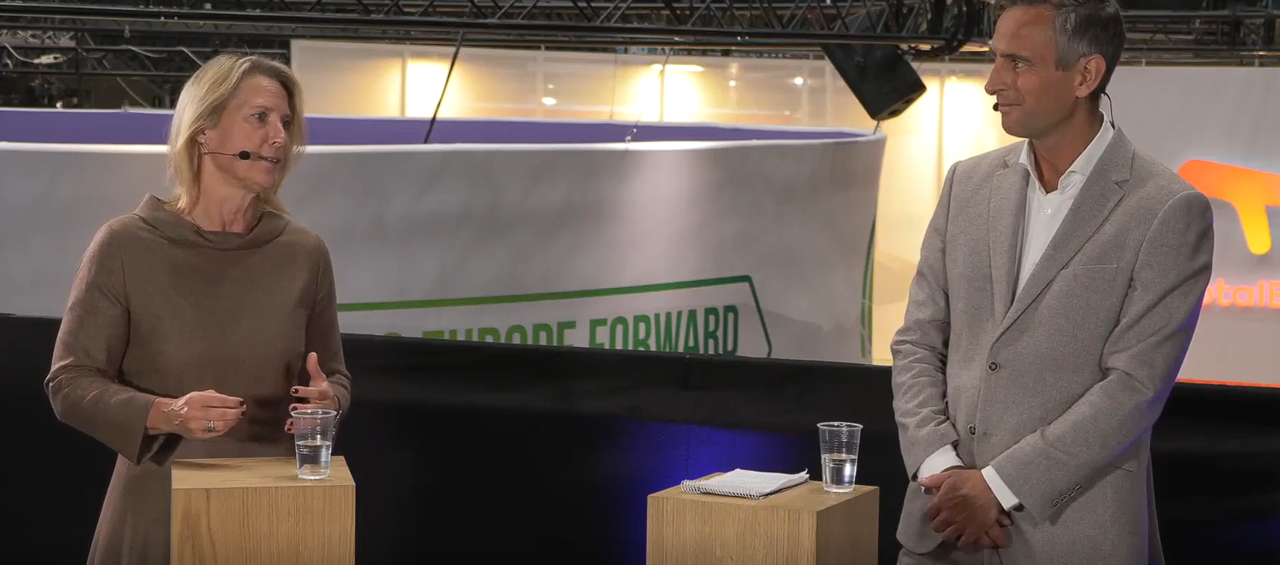
For Jones, the transition has served a vital purpose in replacing a large amounts of planned coal plants with lower-emission, renewable energies, thus avoiding the worst case climate change scenarios. He is, though, sanguine about the bottlenecks restricting a more full-bodied breakthrough of these energies, namely national grids and flexibility.
Flesche agrees, stating that the ‘energy transition has left the station’. Both are clear, too, just how vital the battery revolution is and will be not only to support the storing of cheaper wind and solar, but also in relieving some of the pressure on, in many cases, struggling, aged grids. The coming years for battery development and deployment, Jones suggests, will be definitive, considering that that ¾ of the energy demand growth is forecast to be in sun-belt countries.
Cost and competitiveness
Despite more visible impact of emissions on our weather systems, competitiveness has firmly replaced climate as the most prominent c-word on many national and regional agendas. This is intimately intertwined with another C, cost.
As both panelists state, solar followed by wind remain the most affordable energy sources globally (by LCOE). Integrating them, however, into often strained energy grids carries with it additional cost. Delivering on one of the primary promises of ‘clean energy’, its low cost, says Jones, is going to depend on consistent policy implementation and investment into areas such as national grids.
